What is hub and spoke?
A hub and spoke strategy involves organizing content around a main theme where a central page, a hub, is complemented by several sub articles, known as spokes, which cover different aspects of the same topic. This structure helps AI systems understand that a website covers a specific field in depth.
 Marcus StrömbergFeb 18, 2026
How does hub and spoke work?
A hub and spoke structure is all about building "topic clusters" to establish genuine authority on a subject.
Think of the hub page as your main guide, while the sub articles,the spokes, deep dive into specific questions and related niches.
By organizing content this way, the connection between different pages becomes much clearer. It helps both readers and search engines grasp how everything fits together, which can boost visibility in AI-driven search like Google AI Mode, ChatGPT, and Google AI Overview.
Why hub and spoke matters for AI search
- Building thematic authority
Search engines and AI platforms tend to favor sources that tackle a topic from multiple angles. A hub supported by various sub-articles demonstrates both breadth and expertise in the field. - Creating a clearer SEO structure
Internal linking between your hub and spokes makes it much easier for both traditional search engines and AI-driven search to grasp how your pages relate to one another. - Better for your visitors
Readers can start with a big-picture overview and then dive into the specific details that matter most to their particular situation. - Longterm impact
Hub pages often serve as "evergreen content" that stays relevant over time, allowing you to continuously update them and add new spokes as the topic evolves.
Building a hub and spoke strategy
A hub and spoke strategy is built on three core elements:
- The hub page
Think of this as your definitive, longterm guide that covers the main theme from start to finish. A good example would be a comprehensive manual for a specific industry or field. - Spoke pages
These are deep dive blog posts that tackle subjects tied to the hub. Typical topics include costs, practical usage, buyer's guides, or common FAQs within that niche. - Internal linking
Every spoke should link back to the main hub page. These sub articles can also link to each other, as well as to any relevant products or services you offer.
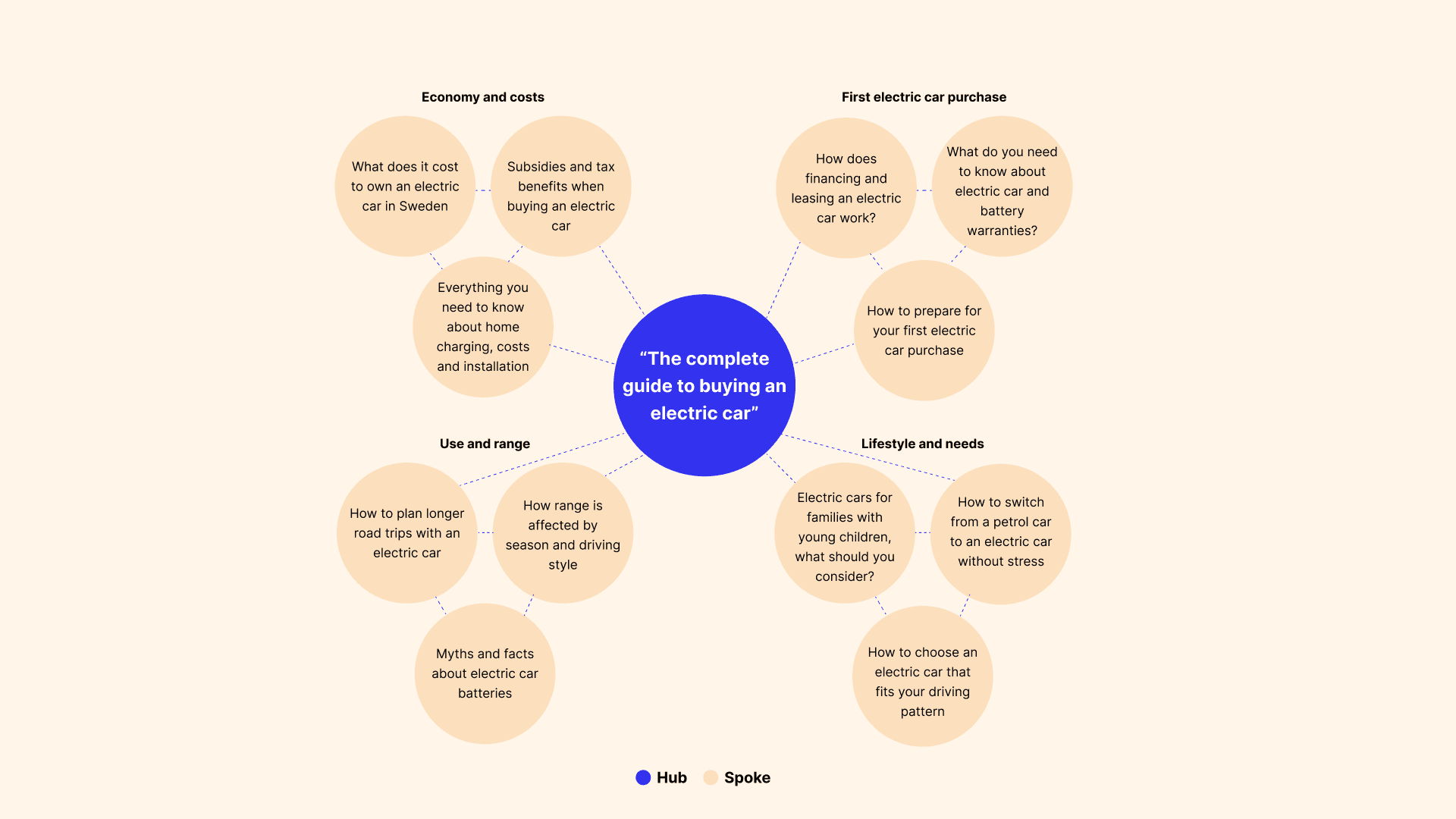
Example of a hub and spoke structure
Finding the right content for your hub and spoke
A crucial step is identifying the actual questions your audience is looking for answers to. There are several ways to do this. One effective approach is to gather insights from sales and customer service, as they usually know exactly which questions keep coming up.
Search data is another vital source. Tools like "Also asked" help you uncover "fan out queries," and the "People also search for" section at the bottom of Google results can point you toward common questions within a specific topic.
Once you’ve identified which questions to answer, it becomes much easier to build a hub and spoke structure. Your central hub provides the big picture, while each spoke dives deep into a specific detail and links back to the main topic.
Marcus Strömberg
Marcus Strömberg has extensive experience in digital marketing, analytics, and data driven visibility. He helps companies understand how they are seen, compared, and chosen in AI search, as well as how they can work systematically to grow online.